How to Write a Statement of Work: Complete SOW Guide and Template
The Stoatify team
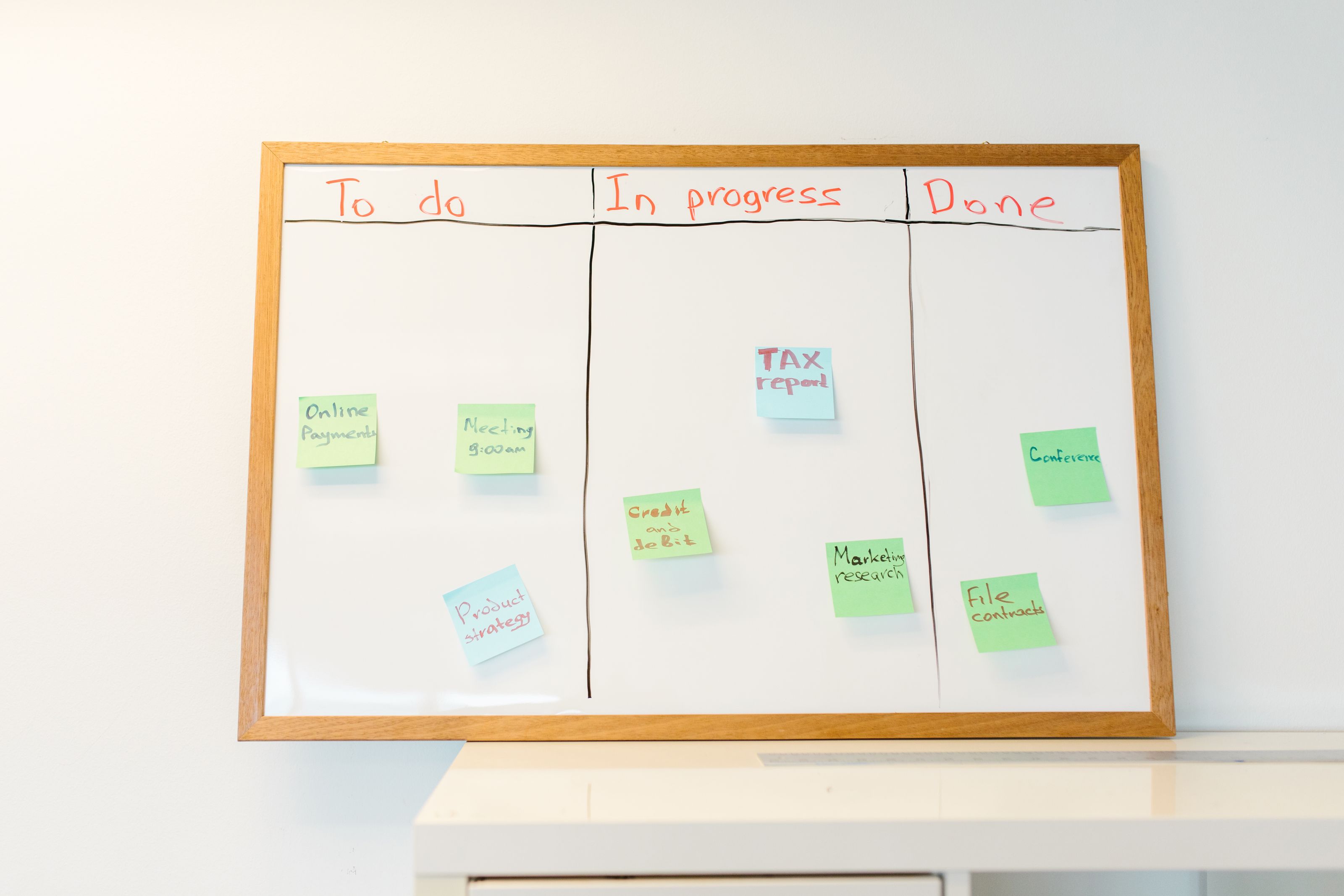
A promising project can become frustrating when the client and service provider remember the agreement differently. What counts as finished? How many revisions are included? Who supplies the source material? When is payment due? A statement of work, commonly shortened to SOW, turns those assumptions into a practical project plan that both sides can review and approve.
This guide explains how to write a statement of work for a client engagement. It is general educational information, not legal advice. Contract requirements vary by location and transaction, so consult a qualified lawyer about language, enforceability, and risks specific to your project.
What is a statement of work?
A statement of work is a document that defines the work one party will perform for another. It translates a business goal into an agreed scope, concrete deliverables, a schedule, responsibilities, performance or acceptance standards, and commercial terms. In many engagements, an SOW sits under a broader master services agreement that contains reusable legal terms, or under an independent contractor agreement for recurring work. It can also form part of a standalone contract when drafted that way.
A useful drafting benchmark comes from the U.S. Federal Acquisition Regulation. Its guidance says a statement of work should cover the work, location, period of performance, deliverable schedule, applicable performance standards, and special requirements. Separate performance-based guidance recommends describing required results and making performance measurable. These federal procurement rules do not govern every private engagement, but their emphasis on observable outcomes is valuable for any clear SOW.
Statement of work vs. scope of work
Scope of work usually means the section that describes what is included and excluded. A statement of work is normally the complete project document, with the scope plus deliverables, dates, fees, responsibilities, standards, and approval terms. People sometimes use the phrases interchangeably, so define the document by its contents rather than relying on its title.
- Describes what is included and excludedIncludes the scope plus everything needed to run the project
- Often one section of a larger documentThe complete project document, or a standalone contract
- Answers: what will be done?Answers: what, when, by whom, for how much, and accepted how?
- Leaves out dates, fees, and acceptance on its ownAdds milestones, fees, responsibilities, standards, and sign-off
What to include in a statement of work
- Parties and project identification. State the legal names of the client and service provider, the project name, the effective date, and any master agreement the SOW belongs to.
- Purpose and background. Explain the business problem, desired outcome, and context in a short paragraph. This helps readers interpret the detailed requirements consistently.
- Scope. Describe the services included, the users, systems, locations, or business units covered, and the boundaries of the engagement.
- Deliverables. Name each item the provider must hand over, including its format, quantity, essential specifications, and owner. Avoid vague labels such as complete website without defining pages, functions, and handoff materials.
- Milestones and schedule. Give a start date, milestone dates, review windows, dependencies, and target completion date. Say what happens to the schedule when client inputs arrive late.
- Roles and responsibilities. Separate what the provider will do from what the client must supply, review, approve, or make available.
- Acceptance criteria. Define the objective checks used to decide whether each deliverable is accepted, who performs them, how feedback is submitted, and how long the review period lasts.
- Fees and payment. State pricing, currency, deposits, milestone payments, invoicing dates, payment deadlines, approved expenses, and applicable taxes. Make clear whether the engagement is fixed price, time and materials, or another model.
- Assumptions, constraints, and exclusions. Record facts the estimate relies on, technical or regulatory limits, and work that is specifically out of scope.
- Change control. Explain how either side requests a change, how its cost and schedule impact will be assessed, and that authorized representatives must approve it before the additional work begins.
- Signatures and authority. Identify the people authorized to approve the SOW and changes. Include signature and date fields for each party.
How to write an effective SOW, step by step
1. Start with the outcome. Write one or two sentences describing the result the client is buying. A measurable outcome gives the rest of the SOW a clear center. For example, replace improve onboarding with deliver a responsive five-page onboarding flow that supports the approved user journey and passes the listed acceptance tests.
2. Break the outcome into deliverables. Give every deliverable a name and description. Specify file types, environments, dimensions, integrations, documentation, or training where relevant. If draft and final versions are separate handoffs, list both.
3. Draw the boundary. Add an included section and an excluded section. State revision limits, content responsibilities, supported platforms, and any post-launch support. This is one of the strongest ways to prevent accidental scope growth.
4. Build a realistic sequence. Tie milestones to concrete events such as kickoff, first draft, client review, revision, acceptance, and handoff. Identify dependencies and give each party a response time. Use calendar dates when they are known and a precise calculation when they are not, such as five business days after receipt of approved copy.
5. Make acceptance testable. A criterion should let two reasonable readers reach the same conclusion. Describe quality, quantity, timeliness, compatibility, or other observable standards. The Federal Acquisition Regulation similarly emphasizes required results and measurable performance standards.
6. Connect payment to the plan. Match invoices to meaningful points in the work, such as signing, approval of a milestone, or final delivery. State whether acceptance triggers payment and address expenses, tax, late payment, and cancellation in language appropriate to the governing agreement.
7. Add a controlled path for changes. A change request should describe the requested work, revised fee, schedule effect, and any altered assumptions. Requiring written approval before work starts keeps the signed baseline useful while allowing the project to evolve.
8. Review the SOW from both sides. Confirm that the provider can estimate and deliver every promise, and that the client can recognize and test what it will receive. Check names, dates, totals, cross-references, signature authority, and conflicts with the master agreement. Legal review is especially valuable for high-value, regulated, international, or unusually risky work.
A practical statement of work outline
- Title, SOW number, effective date, and related agreement
- Client and service provider legal names
- Project background, purpose, and objectives
- Detailed scope and out-of-scope work
- Deliverables with specifications and owners
- Milestones, dates, dependencies, and work location
- Client and provider responsibilities
- Acceptance criteria and review process
- Fees, expenses, invoicing, and payment schedule
- Assumptions, constraints, and special requirements
- Change request and approval process
- Authorized signatures and dates
Common SOW mistakes to avoid
- Using subjective promises such as high quality, user friendly, or as needed without a test or limit.
- Listing activities but not the deliverables or results those activities must produce.
- Leaving revision rounds, feedback windows, or client dependencies unstated.
- Treating the completion date as fixed while making it dependent on inputs with no due dates.
- Omitting exclusions because the work seems obvious to the people in the kickoff meeting.
- Starting additional work after an informal request without approving its price and schedule impact in writing.
- Copying a generic SOW without checking whether its definitions, governing agreement, and signature blocks fit the actual parties and project.
Create and e-sign a statement of work with Stoatify
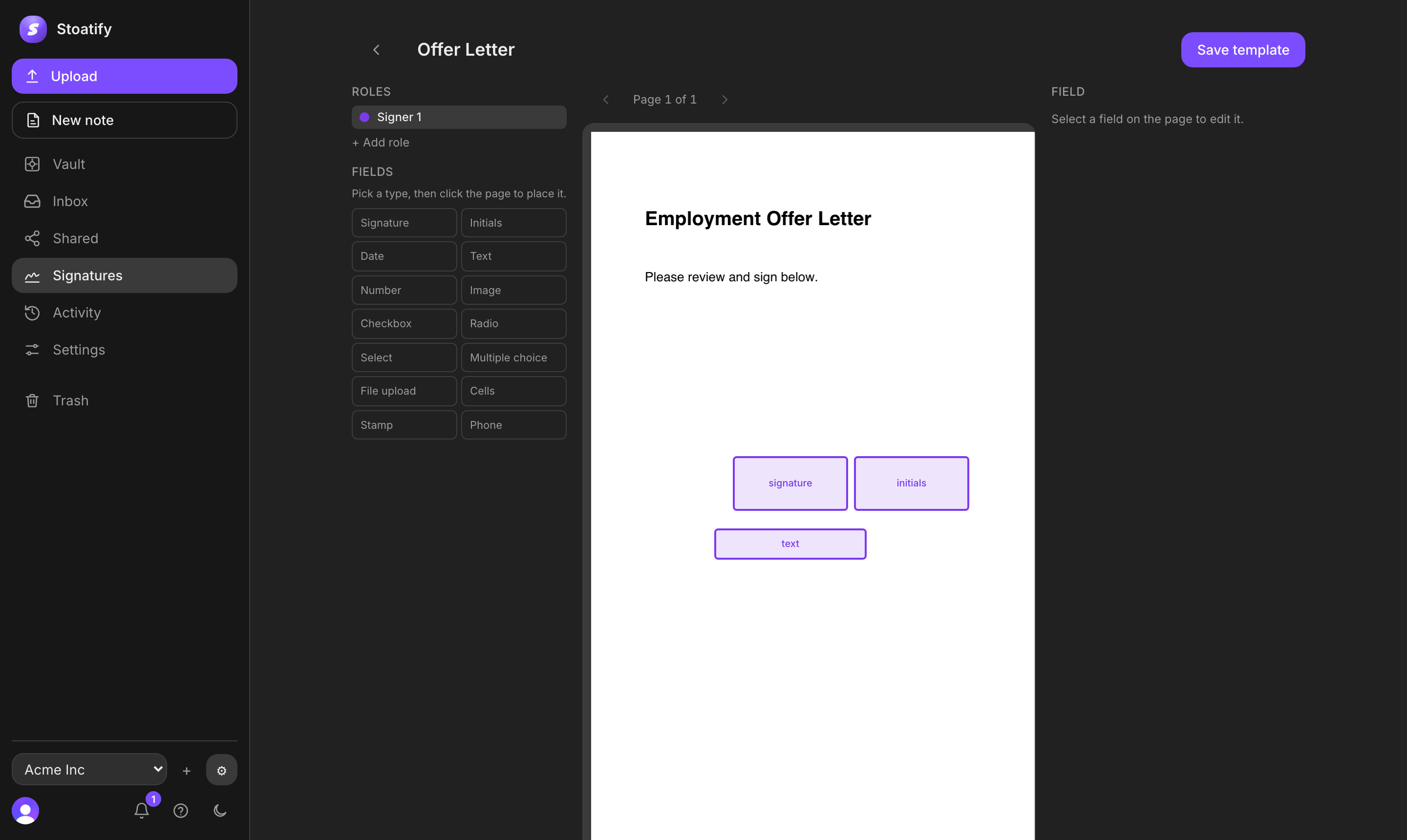
Stoatify includes a prebuilt Statement of Work template with space for the contractor and client, project dates, deliverables, milestones, fees, and both approvals. Open the template, replace the example terms with the project-specific details, review the completed SOW, and send it to the parties for legally binding electronic signatures.
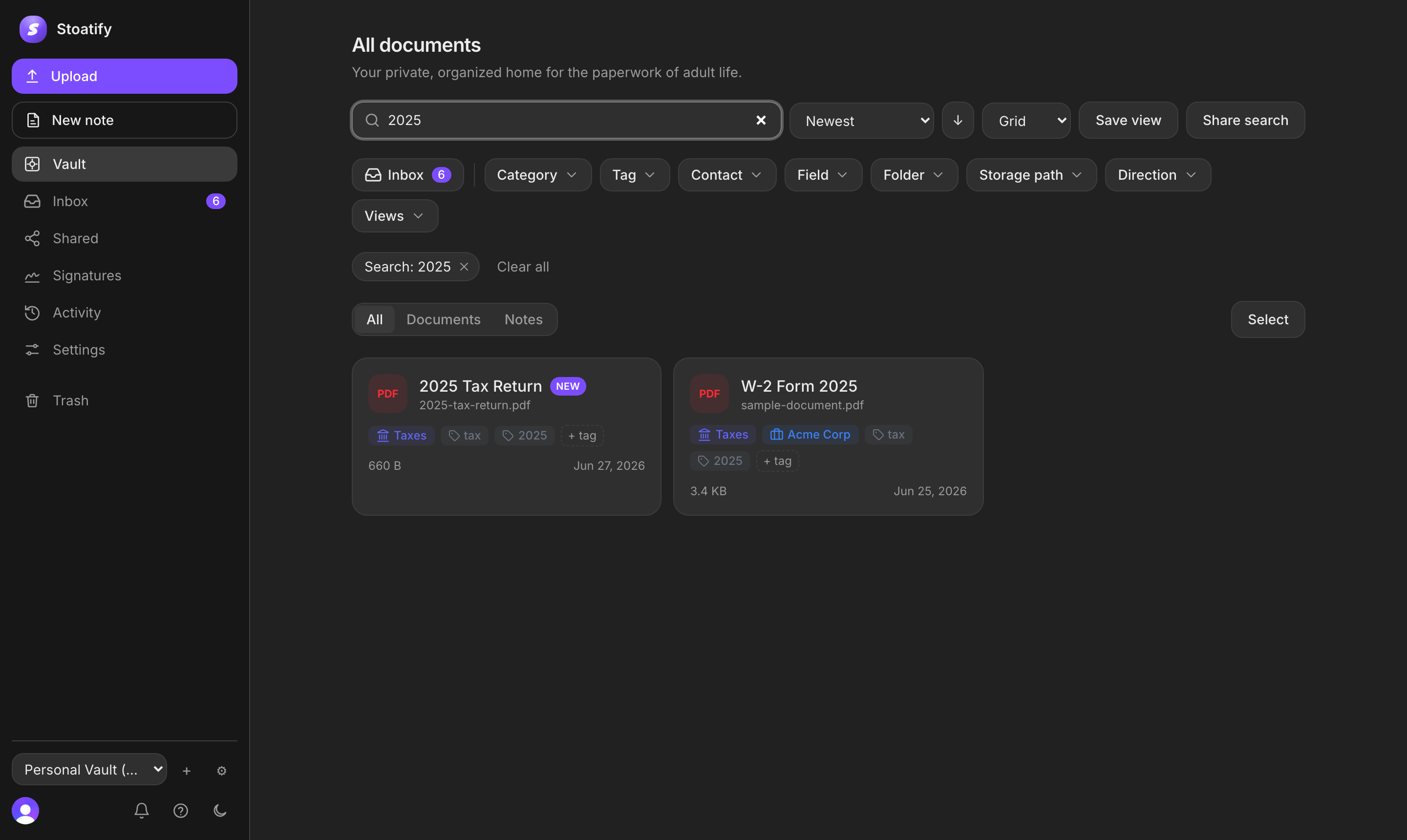
The signed, tamper-evident PDF and audit trail stay with your organized documents, so the approved scope is easy to find the moment a question or change request arrives. Search reaches the words inside the signed SOW and filters by category, tag, and date, which turns the baseline everyone agreed to into something you can pull up in seconds.
In the United States, the federal E-SIGN Act says a signature, contract, or record generally may not be denied legal effect solely because it is electronic. That does not make every document enforceable or replace the other requirements of contract law. The Act preserves other legal obligations, contains exceptions, and does not generally force a person to accept electronic records. Confirm the rules that apply to your parties, document type, and jurisdiction.
A strong SOW gives the project a shared definition of done. Start with Stoatify's template, make every deliverable and acceptance test specific, and send the finished document for signature before the work begins. For the wider set of paperwork a project generates, the freelancer document checklist covers what to keep and how long to keep it.
Authoritative sources
- U.S. Federal Acquisition Regulation 8.405-2, required contents for statements of work
- U.S. Federal Acquisition Regulation 37.602, results-focused work and measurable performance standards
- U.S. Federal Acquisition Regulation 36.302, defining project requirements in a scope of work
- U.S. Government Publishing Office, Electronic Signatures in Global and National Commerce Act, Public Law 106-229