Why organizing your documents matters (and where Stoatify differs from Google Drive)
The Stoatify team
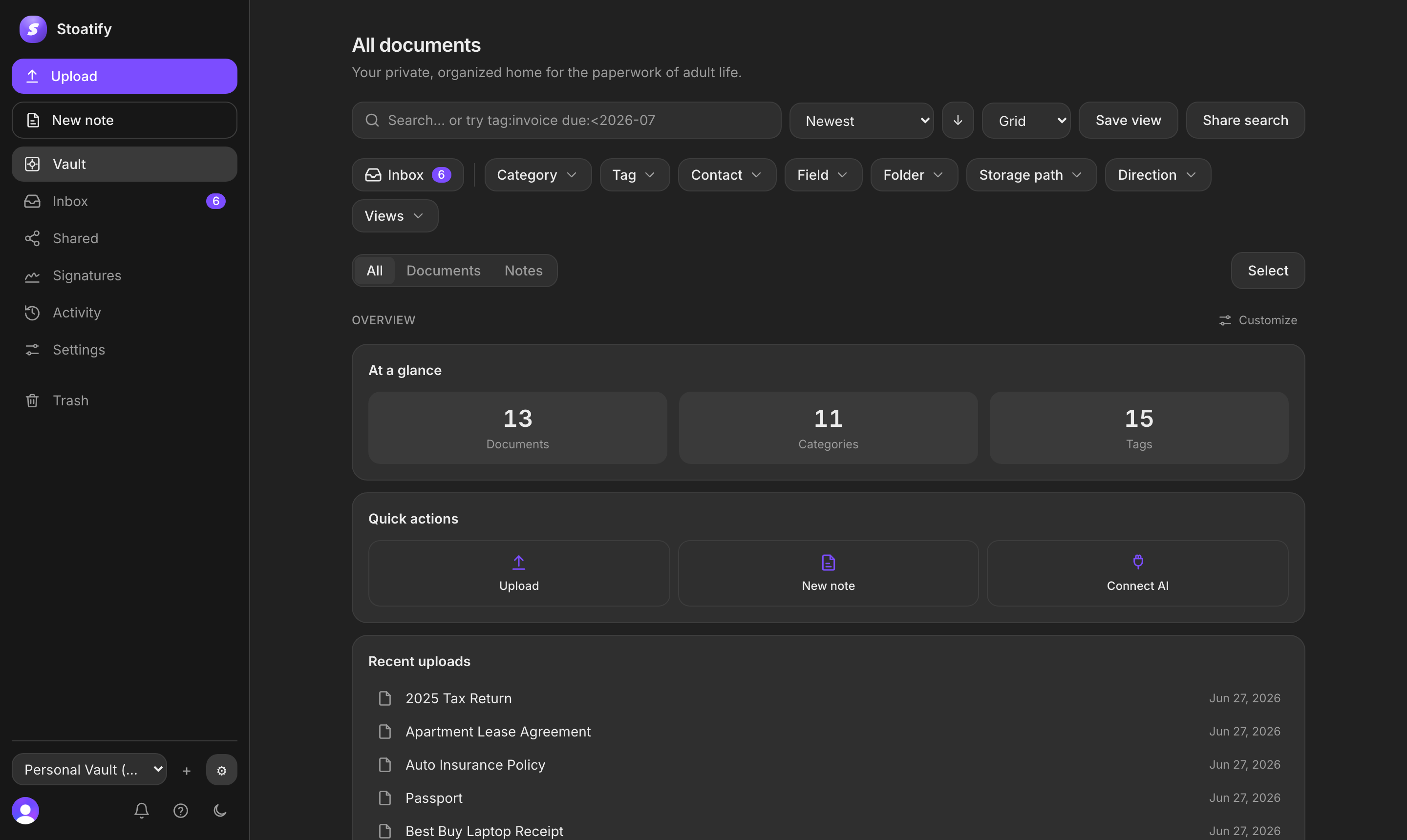
Everyone has a version of the same drawer. A folder called Documents, another called Documents_final, a Downloads pile fourteen screens deep, and the one PDF you actually need for a deadline this afternoon sitting in none of them. The file is not lost, exactly. It is just somewhere, and somewhere is not good enough when a landlord, an accountant, or a border agent is waiting.
Disorganized documents feel like a small, private annoyance. At scale they are anything but. It is worth understanding why the mess costs so much, and why the usual fix, another cloud drive, quietly makes the problem your job forever.
The cost of a pile is bigger than it looks
The research on this is remarkably consistent, and the numbers are larger than most people expect:
- The McKinsey Global Institute found that workers spend nearly a fifth of the workweek, roughly one day in five, just searching for and gathering the information and documents they need to do their jobs.
- In a 2023 Adobe survey, the most common digital-organization complaint, named by 48 percent of employees, was simply not being able to find documents quickly and efficiently.
- Coveo's workplace study, a survey of 4,000 workers across the US and UK, put the daily average even higher at about 3.6 hours spent searching for information, and found that 31 percent said the frustration of not finding what they needed left them feeling burned out.
And the cost is not only time. The document you cannot find at the moment you need it is the missed reimbursement, the expired warranty, the tax deduction you forgot you qualified for, the contract clause you meant to check. Disorganization does not announce itself. It just quietly makes everything a little slower and a little more stressful.
Storage is not organization
Here is the trap. When people decide to get organized, they usually reach for more storage: a bigger cloud drive, a cleaner folder tree, a fresh naming convention they swear they will keep up this time. For a week or two it works. Then life resumes, files arrive faster than you can file them, and the tree grows the same tangled way it did before.
The problem is that a general cloud drive is designed to store any file and sync it everywhere. That is a genuinely hard thing to do well, and tools like Google Drive do it brilliantly. But storing a file and organizing a document are different jobs. A drive hands you an empty bucket and a folder tree and leaves the actual organizing, the deciding, naming, sorting, and re-finding, entirely to you. It is a filing cabinet with no dividers and no labels. Very roomy, very reliable, and still your problem to keep in order.
Where Stoatify differs from Google Drive
Stoatify starts from the opposite end. It is built specifically to manage documents, from personal records to contracts and organization policies, and it does the structuring work that a drive leaves to you. The two tools are aimed at different jobs:
- Starts you with an empty folder tree that you design and maintainStarts you with categories for personal and organization records, tags, and saved views
- Optimized for storing and co-editing any kind of fileOptimized for organizing, retrieving, and safeguarding documents
- Filename and full-text search across everything you ownOCR search that reads inside scans, plus category, tag, custom-field, and date filters
- Signing lives in a separate tool; you save the finished PDF back yourselfSend for e-signature, then download the sealed copy for the vault
- Sharing built around shareable and public linksEvery byte proxied behind your session, with no public links
- Bundled into a broad ads-and-services ecosystemPaid by subscription, never by advertising or scanning your content
Those differences are easier to feel than to describe. Here is what each one looks like in practice.
Categories instead of an empty tree
Google Drive asks you to invent and maintain a folder structure. Stoatify seeds categories for personal, small-business, or enterprise work, plus tags and saved views, so a document has a clear place from the moment it lands. No naming convention to invent, no folder to remember burying it in.
Search that reads inside your documents
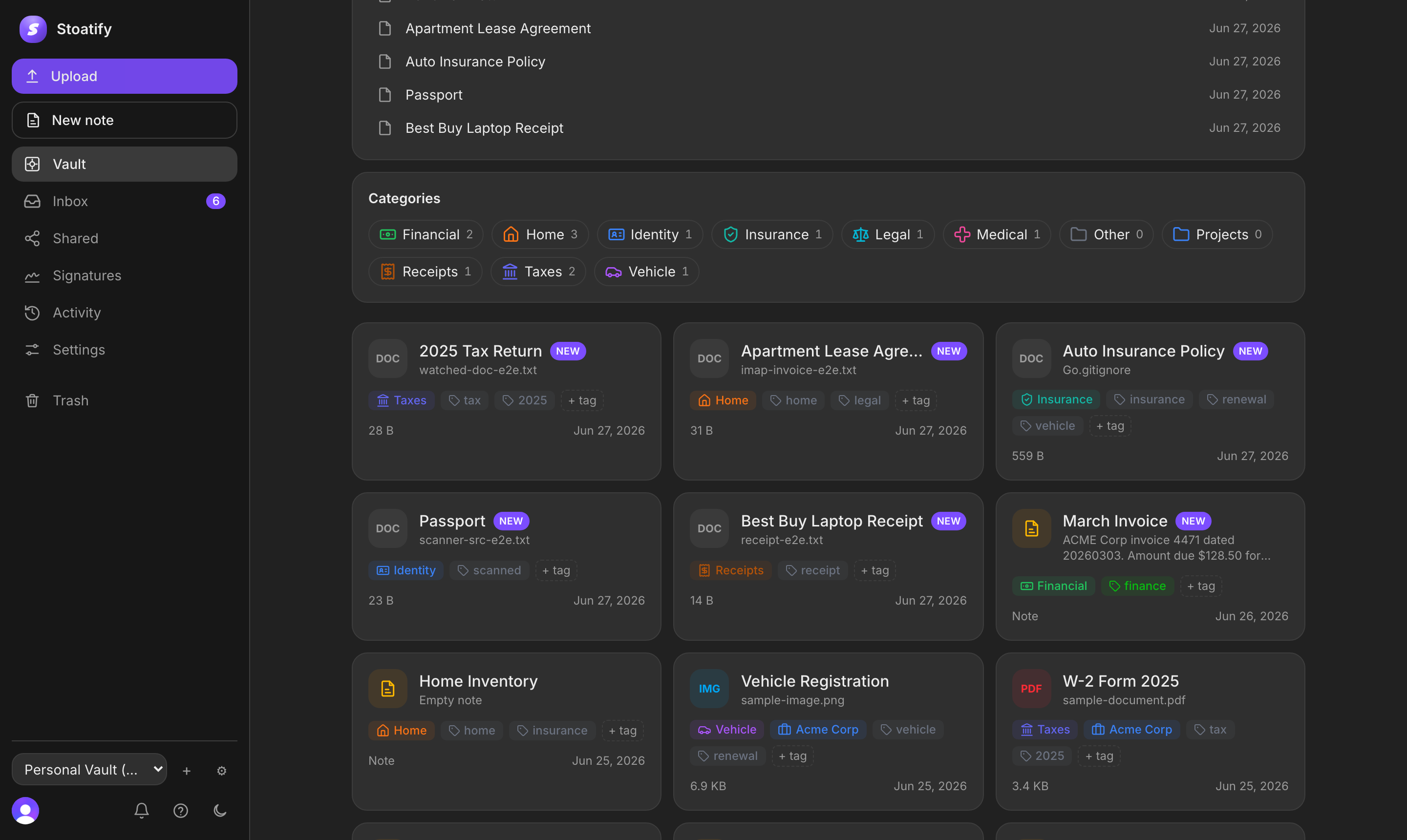
Both tools index text, but they aim at different targets. Stoatify pairs OCR, so search reaches the words inside a scan or a photographed receipt, with structured filters for category, tag, custom field, direction, and date. It is built to retrieve one specific document in seconds, not to dig through a sprawling shared team drive.
Sign and version in place
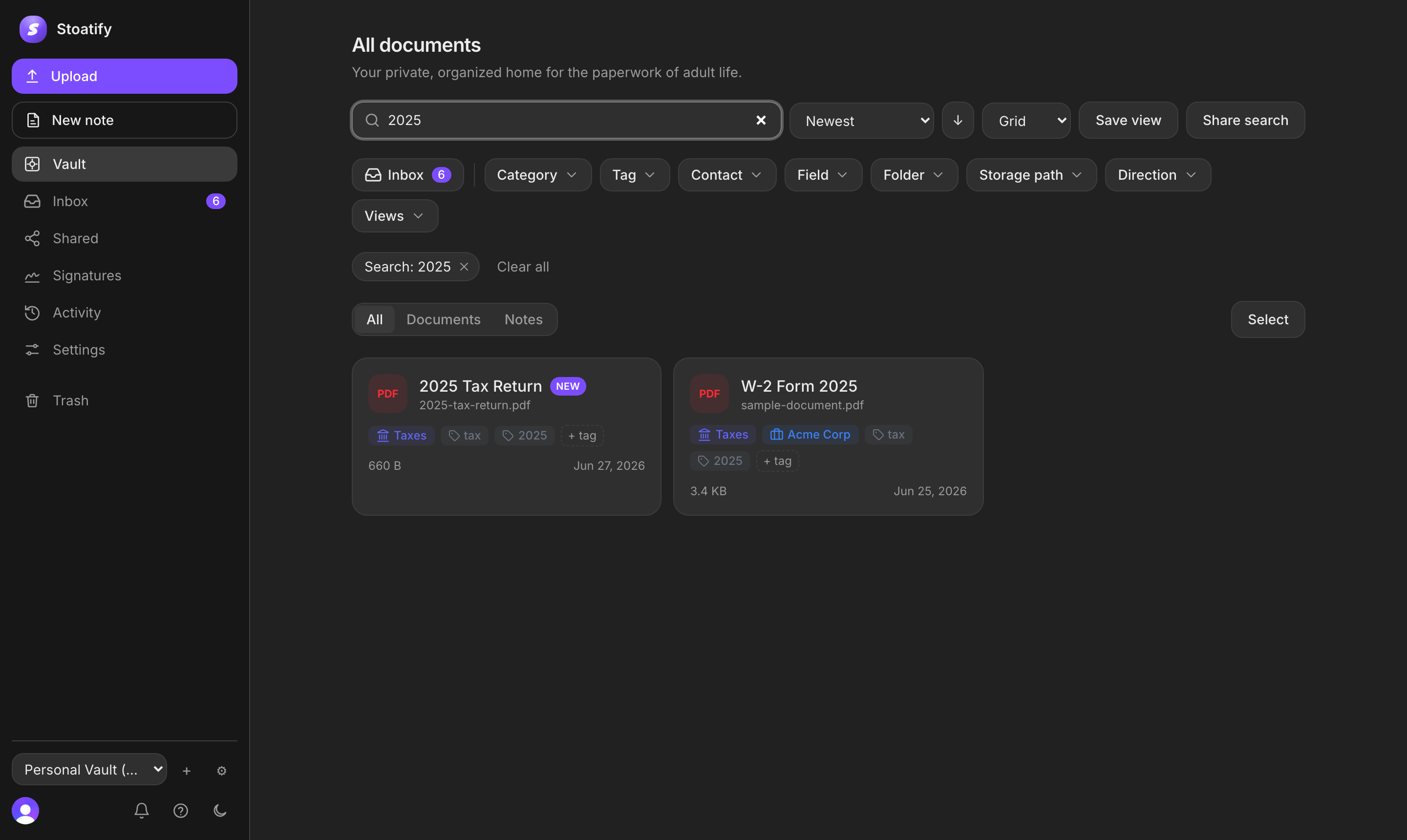
Send a document for a tamper-evident e-signature, then download the sealed PDF and keep it in your organized vault with a certificate of who signed and when. Re-upload a newer copy and every prior version is kept, so you can see what changed and restore an earlier one.
API-controlled file access
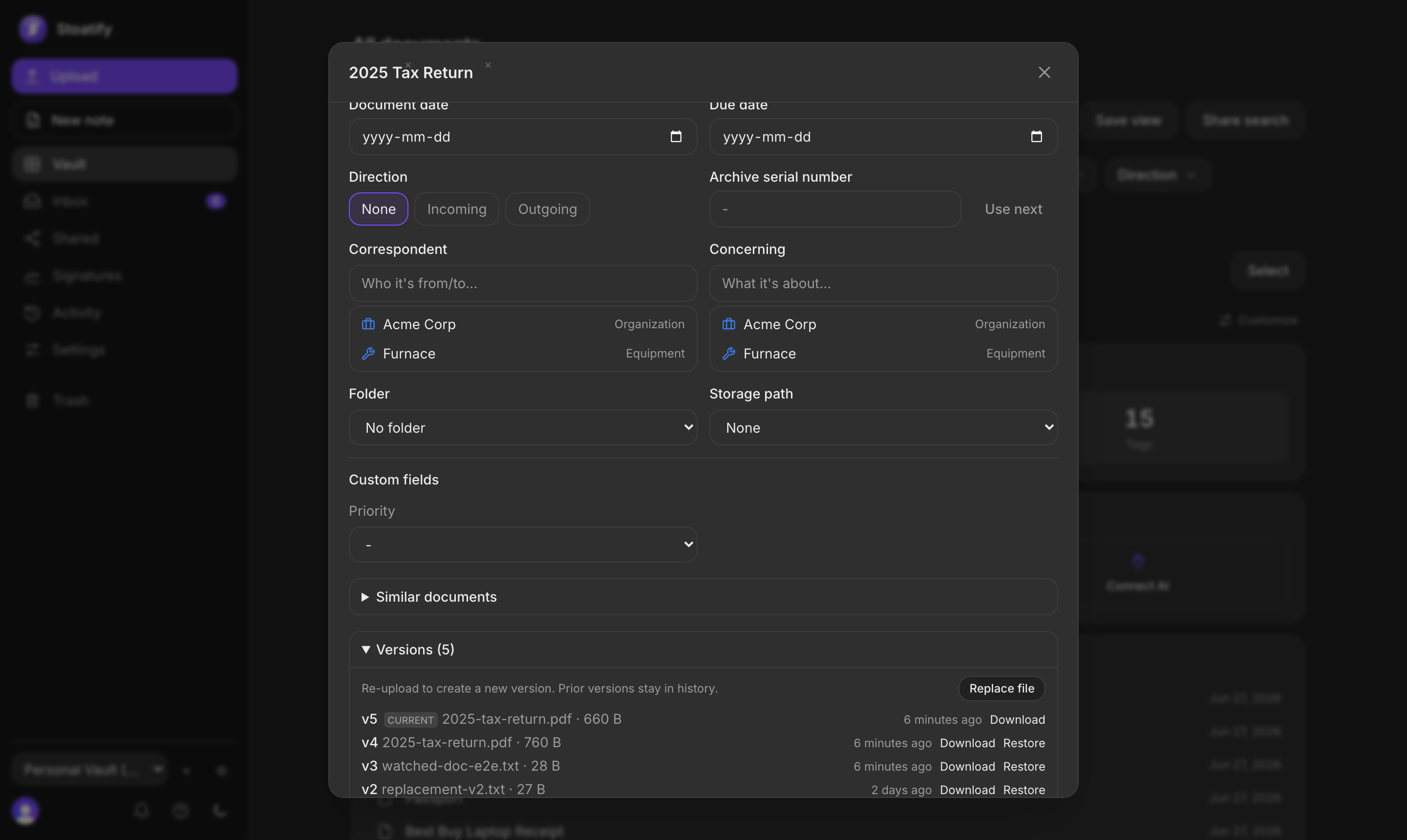
Uploads and downloads pass through the Stoatify API. An unauthorized document lookup returns a not-found response rather than confirming that the document exists. The business runs on subscriptions, not on advertising or mining your content.
None of this means Google Drive is bad. If you live in Google Workspace and mostly need to co-edit and share arbitrary files, big media, spreadsheets, slide decks, Drive is excellent and hard to beat on collaboration and price. The distinction is narrower and more useful than better or worse: a drive is the right tool for storing and sharing anything, and Stoatify is the right tool for organizing, searching, signing, sharing, and governing documents.
The point of organizing is to stop thinking about it
The goal of getting your documents in order was never tidy folders for their own sake. It is the quiet confidence that the thing you need is one search away, that nothing important is silently expiring in a pile, and that you can hand exactly the right file to exactly the right person in seconds. That is the difference between a place where files accumulate and a place where documents live.
If you have been meaning to deal with the drawer, this is your sign. Upload one document and let it find its home. If that drawer is mostly client work, organizing client documents as a freelancer applies the same idea to a book of clients.