The freelancer document checklist: what to keep and how long to keep it
The Stoatify team
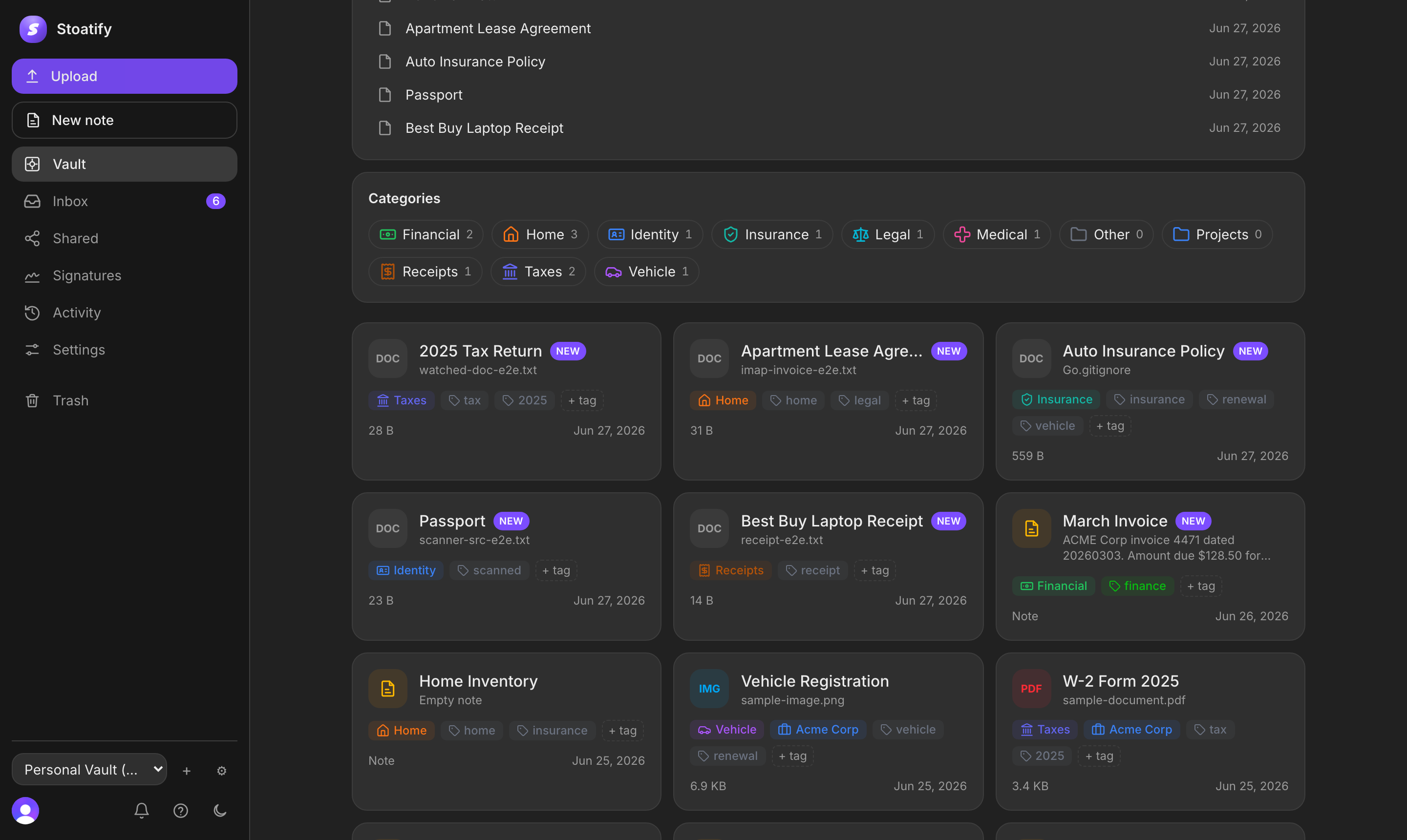
Nobody starts freelancing because they wanted to run a filing system. The paperwork arrives anyway, and from every direction at once: a contract in your email, an invoice in your accounting app, a receipt photographed in a restaurant, a tax form in the post in February. None of it is hard on its own. Together, and left for eleven months, it is the reason a Sunday disappears.
This is the list of what to keep, how long to keep it, and a structure that still works when you have thirty clients instead of three. It is general information for independent workers, not tax or legal advice. Retention rules differ by country and by state, and your own circumstances can extend them, so check with your accountant before you delete anything you might need.
The five piles
Everything a freelance business generates falls into one of five groups. Sorting by group first is what stops the list feeling infinite: you are not filing four hundred documents, you are filing five kinds of document, over and over.
- Client and contract records: what you agreed to do, for whom, and on what terms.
- Money coming in: what you earned, and whether you were actually paid for it.
- Money going out: the deductions you can defend.
- Tax and filing records: the returns, plus the working papers behind them.
- Business identity and cover: proof the business exists and is allowed to operate.
1. Client and contract records
This is the section you reach for when a client disputes scope, timing, or payment, which is exactly the moment you cannot afford to be scrolling an email thread from last spring. Keep one set per client:
- The signed contract or master agreement. Keep the fully countersigned copy, not the draft you sent. If you are still working from a template you inherited from someone else, the guide to the freelance service agreement covers the clauses worth having in it.
- The statement of work or project brief for each engagement. Scope, deliverables, and dates are what actually settle a disagreement, and they are the part most often left verbal.
- Change orders and scope amendments, including the email thread where the client agreed to them. A revision nobody wrote down is a revision you will be arguing about later.
- Every non-disclosure agreement you have signed, with its expiry noted. Some outlast the engagement by years and quietly bind you long after the work ends.
- The proposal or rate sheet you quoted from, which is what answers a client asking why this project cost more than the last one.
- Intellectual property and licensing terms: who owns the work, what the client may reuse, and whether you kept the right to show it in a portfolio.
- Subcontractor paperwork, if you hand work to anyone else. Their independent contractor agreement, their NDA, and their tax form belong alongside the client engagement they were hired for.
- Client onboarding details: billing contact, purchase order number, invoicing portal, and payment terms. Losing these is the most common reason an invoice sits unpaid for a month.
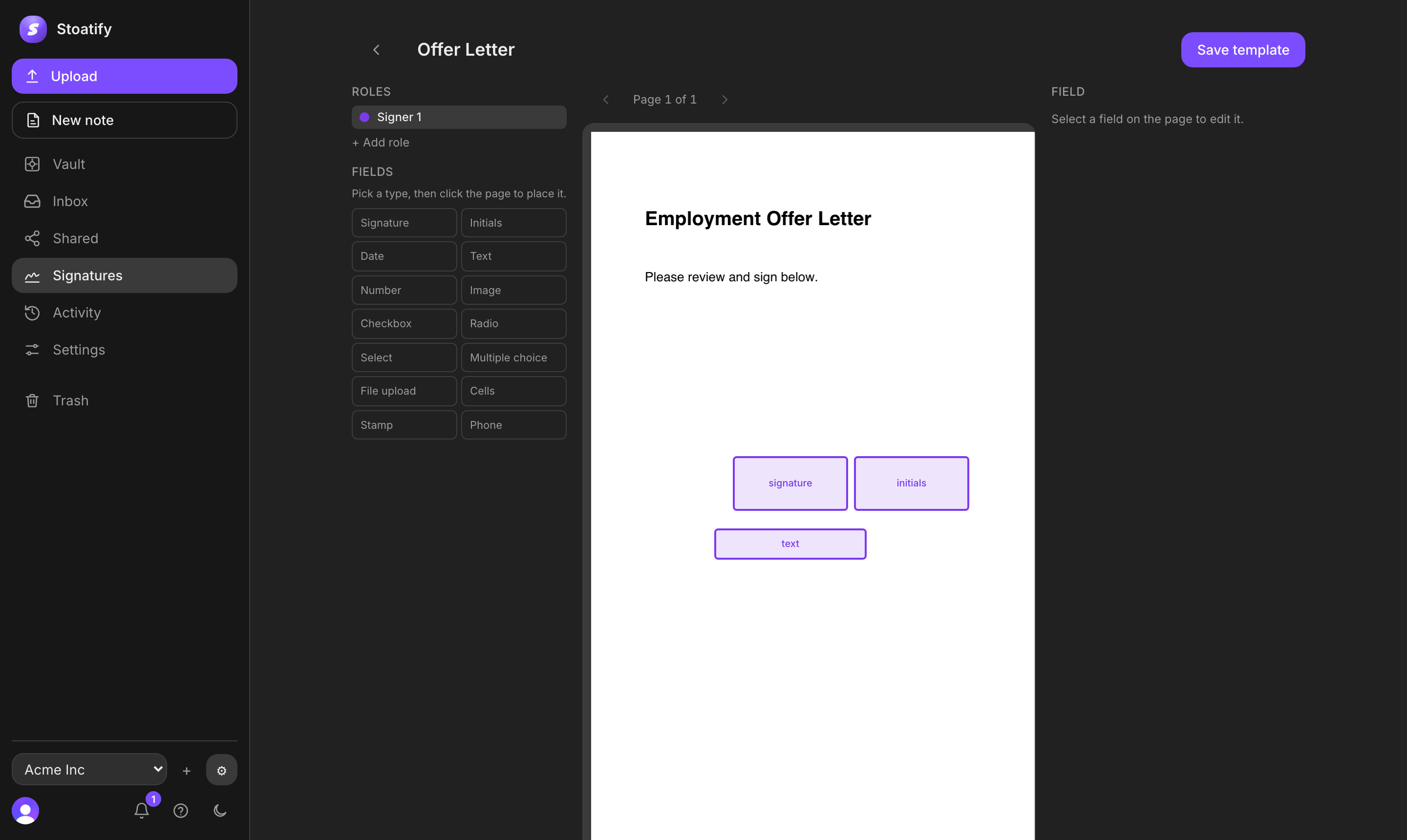
2. Money coming in
Income records are the first thing an auditor asks for and the first thing you need when chasing a late payer. The test is whether you could reconstruct a full year of revenue from this pile alone.
- Every invoice you issued, including the ones you voided or wrote off. A gap in the number sequence is the kind of thing that invites questions.
- Proof of payment against each one: remittance advice, the bank statement line, or the payout report from your payment processor.
- Monthly statements from Stripe, PayPal, Wise, or any marketplace you bill through, including their fees, which are deductible and routinely forgotten.
- Business bank and credit card statements, every month, for every account the business touches. These are what reconcile everything else on this list.
- Deposits and retainers, plus the record of what was drawn down and when. Money held against future work is not the same as money earned.
- Late fee and collections correspondence, the demand letters and the replies, in case it ever escalates.
- The tax forms clients issue to you, such as a 1099-NEC or 1099-K in the US and the equivalents elsewhere. Reconcile them against your own invoice records rather than trusting them.
3. Money going out
A deduction without a receipt is a deduction you may end up handing back. The difficulty is never the filing. It is that a receipt exists for about four seconds before it goes into a pocket.
- Receipts for every business expense. Photograph the paper ones the day you get them, because thermal receipts fade to blank within a year or two.
- Software, subscription, and tooling invoices. The annual renewals are the easy ones to miss: they arrive once and then never again.
- Equipment purchases with their serial numbers and warranties, which you need for depreciation, warranty claims, and insurance.
- Home office records: rent or mortgage interest, utilities, and the square footage calculation you based the claim on.
- Travel, mileage, and client entertainment, with the business reason attached. The reason is the part everyone forgets and nobody can reconstruct in April.
- Subcontractor invoices, the W-9 you collected before paying them, and the 1099 you issued afterwards.
- Accountant, lawyer, and bookkeeper invoices, which are usually deductible and usually overlooked.
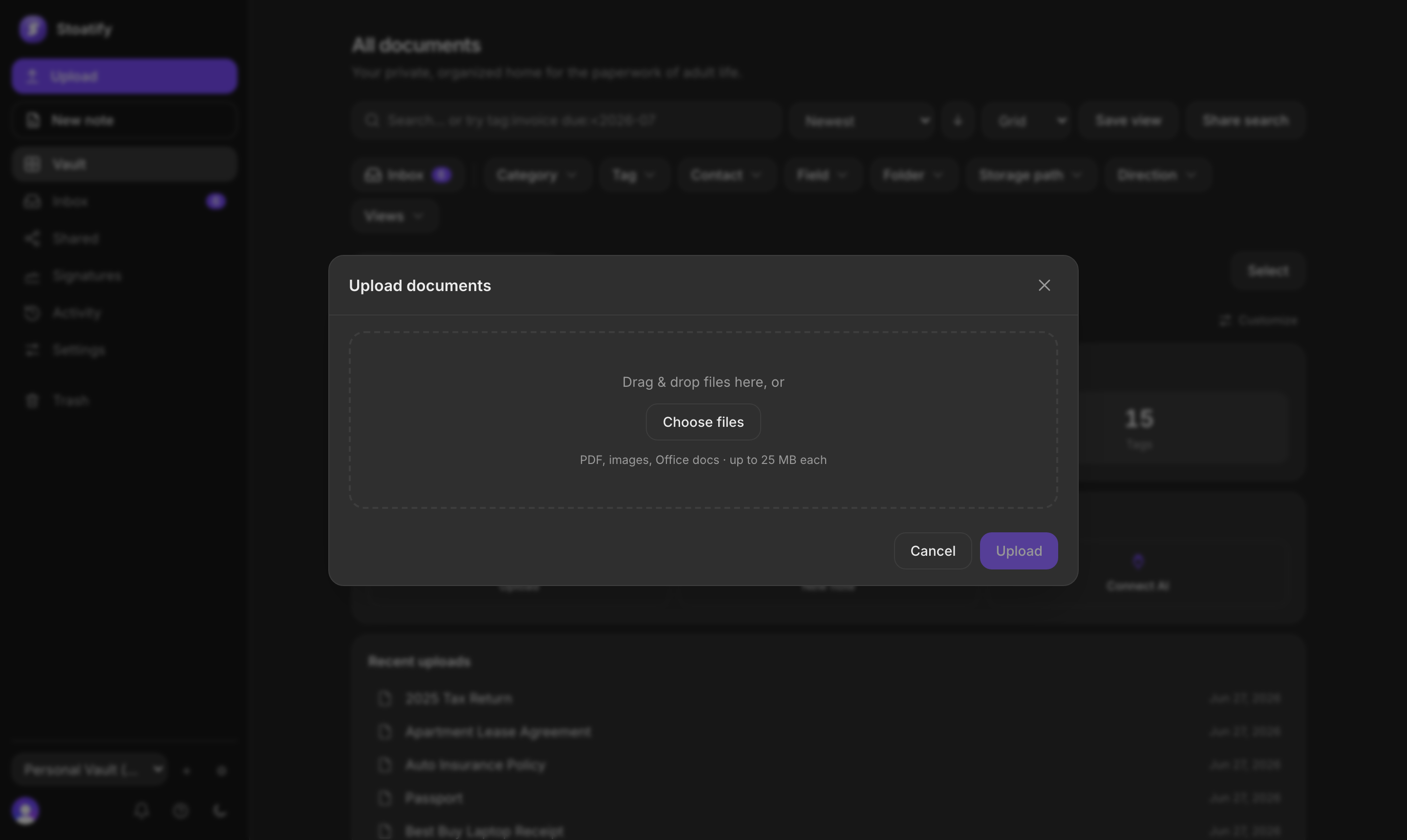
4. Tax and filing records
The return is only half the record. What you can prove is the other half, so keep the working papers with the filing they produced rather than in whichever tool generated them.
- The version of each return actually filed, with every schedule and attachment, not the draft your software last saved.
- Confirmation for each quarterly estimated tax payment. Proving you paid on time is what avoids the penalty.
- Sales tax or VAT registrations and returns, plus the evidence behind any exemption you claimed for a client.
- Payroll records, if you pay yourself or anyone else: the filings, the deposits, and the individual pay records behind them.
- A year-end profit and loss statement for each tax year, matching the return you filed from it.
- Correspondence from any tax authority, including letters about matters you have already resolved. A closed matter still needs its paper trail.
5. Business identity and cover
You need these rarely and urgently, which is the worst possible combination to go hunting for. A larger client's procurement team can ask for three of them in a single afternoon.
- Formation documents: LLC articles, incorporation certificate, partnership agreement, or your sole trader registration.
- Tax identification numbers, such as the EIN letter or a VAT number. Requested constantly during client onboarding.
- Professional licenses and certifications, with their renewal dates recorded somewhere that will tell you before they lapse.
- Insurance policies and the certificates that go with them: professional indemnity, general liability, and equipment cover. Enterprise clients often ask for the certificate before they will sign.
- Business registrations and permits, including local trading permits and DBA filings with annual renewals.
- Bank account and loan agreements, with the terms attached to any credit facility.
How long to keep it
The instinct is to keep everything forever, which is how a vault turns into a landfill. In the US, the IRS publishes periods of limitations that set how long your records need to survive. Where two of them apply, the longer one wins.
- 3 yearsThe ordinary income and expense records behind a filed return. This is the standard assessment window, counted from the date you filed.
- 4 yearsEmployment tax records, counted from the date the tax becomes due or the date you paid it, whichever is later.
- 6 yearsEverything, if you failed to report income you should have reported and it came to more than 25 percent of the gross income shown on the return.
- 7 yearsThe records behind a claim for a bad debt deduction or a loss from worthless securities.
- Life of the assetProperty and equipment records, until the limitations period runs out for the year you finally dispose of the asset. You need the purchase record to compute the gain or loss.
- IndefinitelyThere is no time limit at all if a return was never filed or was fraudulent. Keep the returns themselves, your contracts, and your formation documents regardless.
Those windows are the US federal floor, not the ceiling. State rules, non-US rules, a lender, an insurer, or a clause in a client contract can all require longer. Contracts are the clearest case: one can be enforced long after the work ends, so keep it for as long as anything inside it could still bite.
A structure that still works at thirty clients
Most filing systems collapse because they were designed for the client list you had when you built them. This one has four top-level folders and grows sideways, so client thirty files exactly like client three.
- Clients, one folder per client rather than per project. Projects become subfolders holding the contract, the statement of work, and the deliverables for that engagement.
- Finance, split by direction and then by year: invoices, expenses, and statements. This is the split your accountant already thinks in.
- Tax, one folder per tax year, holding the return and the working papers behind it.
- Business, holding formation, licenses, insurance, and registrations. Small, rarely opened, and needed under pressure.
Then tag across the folders. A document lives in one place but answers to many questions, and the question you actually ask later is rarely the one the folder was named for. Categories and tags cut sideways through the structure, so every contract in the business is one filter away no matter which client folder holds it, and searching the text inside a scan finds the invoice number you half remember. The structure in full, with naming, the client lifecycle and the weekly pass that keeps it true, is in how to organize client documents as a freelancer.
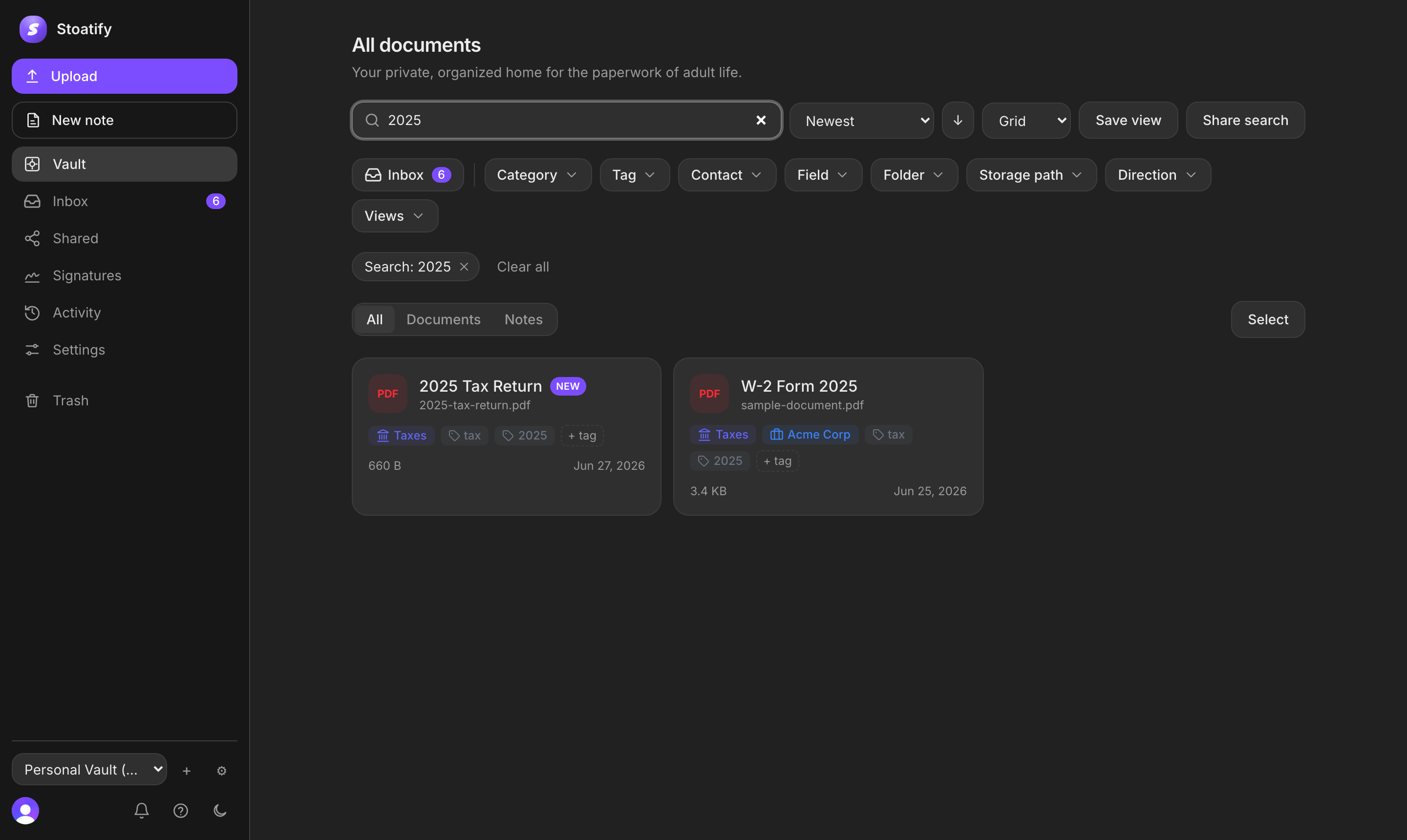
Four habits that keep the list true
The checklist is the easy part. Staying on top of it is what separates a vault from a shoebox.
- Capture at the moment, not at the deadline. Photograph the receipt in the restaurant, file the invoice the day it lands, and you never have to reconstruct anything.
- File by client, find by search. Folders are for the structure you think in, so you do not need a folder for every question you might ask later.
- Keep the signed copy with the draft. Two years on, the countersigned version should not be the thing you go hunting for in an email thread.
- Do a fifteen minute close each month. Reconcile invoices against payments, file the month's receipts, check nothing is missing. Twelve short sessions beat one long weekend in April, and gaps surface while you still remember what happened.
The contracts behind the list
Four items above are documents you have to write rather than simply file. Each one has its own guide:
- Freelance service agreement: the master terms that govern the relationship, clause by clause.
- Statement of work: scope, deliverables, milestones, fees, and a definition of done that both sides approved.
- Non-disclosure agreement: what counts as confidential, who may see it, how long the duty lasts, and what happens when the engagement ends.
- Independent contractor agreement: the agreement to use when you are the one hiring, and the classification questions behind it.
Work the list once, then keep it as the standard you file against. The point was never tidy folders for their own sake. It is that when a client, an accountant, or an auditor asks for something, you produce it in seconds and get back to the work you actually sell.